

What We Know About U.S. Interceptions of Oil Tankers in Venezuela
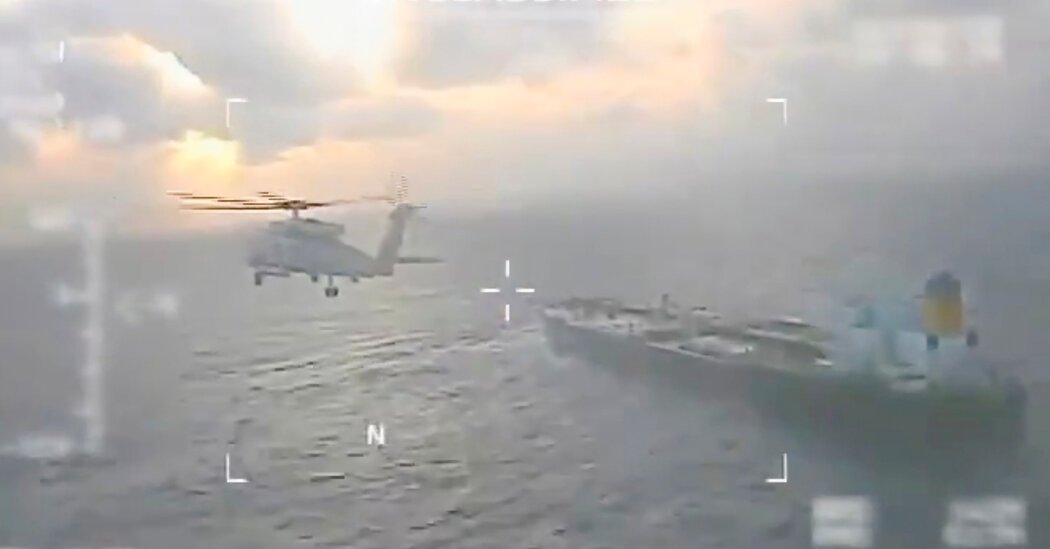
President Trump’s initiative to tighten restrictions on ships transporting oil from Venezuela, a critical aspect of his pressure strategy against Nicolás Maduro’s administration, took a unique turn over the weekend. In the Caribbean Sea on Saturday, the U.S. Coast Guard attempted to stop a tanker named the Bella 1, which officials indicated was not displaying a legitimate national flag, rendering it a stateless vessel subject to international law’s boarding provisions. U.S. authorities had secured a seizure warrant for the Bella 1 due to its previous involvement in the Iranian oil trade; however, the ship declined to comply and sailed off. Here’s what we know about the situation. The ship escaped into the Atlantic Ocean. Vessel-tracking data indicated the Bella 1 was heading to load Venezuelan crude oil and was not currently carrying any cargo. The vessel has been under U.S. sanctions since the previous year for delivering Iranian oil, which authorities allege was used to fund terrorism. The Bella 1 had not yet entered Venezuelan territorial waters and was not being escorted by naval forces. The cargo it was slated to collect had been purchased by a Panamanian businessman who was sanctioned by the United States due to ties with the Maduro family, according to records from Venezuela’s state oil company. U.S. forces approached the Bella 1 late on Saturday. However, it refused to allow boarding, instead turning and initiating what one U.S. official called “an active pursuit.” By Sunday, the Bella 1 was still eluding capture in the Caribbean and was transmitting distress signals to nearby vessels, according to radio communications reviewed by The New York Times and first shared online by a maritime blogger. The ship was heading northeast into the Atlantic Ocean, situated more than 300 miles from Antigua and Barbuda, based on the messages. By Sunday evening, Bella 1 had issued over 75 alerts. The specific measures the United States is implementing to chase the ship remain unclear. The White House indicated that Mr. Trump would address the media on Monday afternoon alongside his defense and navy secretaries, but offered no details regarding the agenda. The tanker was one of two intercepted by the U.S. over the weekend. The Coast Guard on Saturday detained and boarded the Centuries, a tanker that had recently taken on Venezuelan oil, reportedly intended for a Chinese trader. U.S. authorities did not possess a seizure warrant for this Panamanian-flagged ship and mentioned they were verifying the legitimacy of its registration. The length of the ship’s detention remains uncertain. On December 10, the United States seized another tanker, the Skipper, which was transporting Venezuelan crude but had previously carried Iranian oil. The Skipper has been escorted to Galveston, Texas. Mr. Maduro has reacted by ordering the Venezuelan Navy to escort certain tankers, increasing the possibility of armed encounters at sea. U.S. officials assert that these operations aim to undermine Maduro’s financial resources. Trump administration representatives have worked to substantiate the initiative to restrict tanker movements in and out of Venezuela by claiming it is essential to sever oil export revenue that supports narco-terrorism, according to officials. Mr. Trump has accused Mr. Maduro of pilfering oil from American companies and utilizing oil revenues to finance illegal activities, although no evidence has been presented to support these allegations. The threat of additional seizures is already affecting tanker routes. Some vessels that seemed headed for Venezuela have altered their course, as reported by global shipping monitors. A significant portion of Venezuela’s oil is sold to China, some via Cuba, and some is allowed to enter the United States. Updated December 21, 2025, 10:11 p.m. ET. These actions have generated uncertainty about the administration’s ultimate intentions. Allowing the majority of ships to continue operating would not equate to a genuine blockade — considered an act of war — and would instead resemble a series of law enforcement efforts. Seizing the tankers is part of a broader anti-Maduro campaign by the U.S. The Trump administration has spent recent months bolstering a substantial military presence in the Caribbean under the guise of a counternarcotics initiative. The United States has targeted boats the Trump administration claims were involved in drug smuggling, resulting in the fatalities of at least 104 individuals. Mr. Trump has accused Venezuela of inundating the U.S. with fentanyl. However, Venezuela is not known to produce drugs and has no recognized participation in the fentanyl trade. Most cocaine passing through the country is destined for Europe, and numerous legal experts argue that the strikes on these vessels are unlawful. Privately, U.S. officials maintain that the campaign’s objective is less about combating drug trafficking and more focused on removing Mr. Maduro, who has been long accused by both Democratic and Republican administrations of electoral fraud, suppressing opposition, and committing human rights violations. Recently, Mr. Trump and his advisors have emphasized another goal: gaining leverage over Venezuela’s extensive oil reserves, which are the largest globally and crucial to its economy. Historically, Venezuela welcomed American energy businesses, and Mr. Trump has expressed a desire to access those resources once more. The targeted vessels constitute a “ghost fleet.” Experts estimate that as much as 20 percent of the world’s tankers transport oil from Iran, Venezuela, and Russia in defiance of U.S. sanctions. These ships often conceal their locations and submit false documentation. The Bella 1, for instance, manipulated its location signal during a past voyage. U.S. officials assert they have pinpointed other tankers carrying Venezuelan oil whose historical connections to the Iranian oil trade render them subject to U.S. sanctions. Mr. Trump stated last week that further seizures could occur, announcing a “complete blockade” of “sanctioned oil tankers” traveling to and from Venezuela. However, at least one vessel boarded by U.S. forces, the Centuries, does not appear on the Treasury Department’s public sanctions list. Venezuela’s government has denounced the boarding of the Centuries as theft and hijacking, accusing the United States of forcibly disappearing its crew.
Published: 2025-12-22 10:03:00
source: www.nytimes.com