

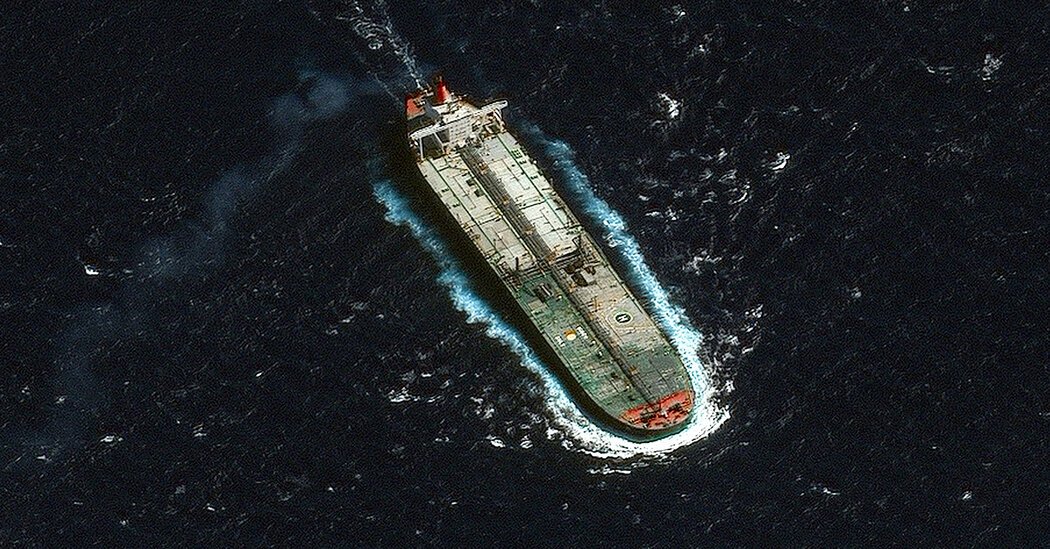
Trump’s Tanker Crackdown Paralyzes Venezuelan Oil Exports
The United States’ robust initiative against vessels transporting Venezuelan crude has plunged the nation’s oil sector into chaos, threatening the main revenue source for its government. President Nicolás Maduro of Venezuela has found it challenging to adapt to President Trump’s significant increase in pressure against his administration, which has resulted in U.S. law enforcement taking measures against three tankers linked to the distribution of Venezuelan crude, according to sources familiar with the Venezuelan oil sector. These individuals requested anonymity due to the sensitive nature of the topic. Venezuela’s ports are overflowing with tankers loaded with oil, as officials worry about allowing them to enter international waters and potentially face U.S. scrutiny. Data on shipping reflects that tankers heading for Venezuela have turned back halfway. Shipowners are also terminating agreements to load crude, the sources revealed.
In the last fortnight, the United States seized a sanctioned vessel transporting oil while it was en route from Venezuela to Asia. Another oil carrier that was not under U.S. sanctions was intercepted. Additionally, the U.S. Coast Guard attempted to board a third tanker that was en route to Venezuela for cargo pick-up. These actions have effectively immobilized Venezuela’s oil export sector, as confirmed by the sources and shipping information. Oil constitutes a significant portion of the nation’s foreign currency revenue. To maintain operation of its oil wells, the Maduro administration is contemplating renting privately owned tankers for storage of crude until a sales strategy is formulated, the sources indicated. However, this solution is only temporary. “This can’t continue for months,” stated Jim Burkhard, global head of oil crude research for S&P Global Energy.
Furthermore, Mr. Maduro is deliberating a stronger response, according to industry insiders. Venezuelan gunboats have begun to escort ships transporting Venezuelan oil and oil products, though these escorts appear to halt at the boundary of the nation’s territorial waters. The government may escalate its actions by deploying armed troops on tankers destined for China, the primary consumer of Venezuelan oil. Such a decision would complicate U.S. Coast Guard efforts to intercept these vessels, yet it could also embroil Mr. Maduro in military confrontations with a fleet of U.S. Navy warships that Mr. Trump has amassed in the Caribbean recently. Mr. Trump has accused Mr. Maduro, albeit without evidence, of inundating the United States with drugs and of appropriating oil from American corporations.
Some industry experts have characterized the obstacles confronting the Venezuelan oil sector as dire. These issues are threatening to extinguish its modest recovery following years of economic turmoil. In recent times, Mr. Maduro has discreetly moved away from the resource nationalism central to his socialist agenda. His administration has granted oil concessions to multiple private entities and relinquished operational authority in joint ventures between the state oil enterprise and international firms. These reforms yielded positive results, with oil production rising to approximately 1.1 million barrels per day this year, up from around 360,000 barrels in the latter half of 2020.
Mr. Trump’s unexpected action against Venezuela’s tanker fleet has halted this upward trend. According to TankerTrackers.com, which tracks global shipping, only two tankers transporting crude from the Venezuelan state oil company appear to have attempted to traverse beyond the nation’s waters since the initial seizure of the vessel named Skipper on Dec. 10. One of these vessels, called Centuries, was flying the Panamanian flag and was intercepted by the U.S. Coast Guard on Saturday, despite the absence of a seizure warrant. U.S. officials are presently assessing whether the tanker, whose cargo is owned by a reputable Chinese trader, holds valid registration in Panama. The location of the other identified vessel from TankerTrackers.com remained unclear on Tuesday. The Skipper was moved to Texas as legal proceedings were being decided. The Coast Guard also tried to intercept another tanker, Bella 1, on Saturday after it was determined that it was not displaying a valid national flag. The vessel disregarded the interception attempt and sailed onward.
Vessels operating in sectors under sanctions frequently employ tactics to obscure their locations. Recent weeks have seen several more tankers laden with Venezuelan crude, as per sources close to the industry. However, these ships have been remaining in Venezuelan waters, the sources stated. Chevron, the largest private oil operator in the United States, stands out as an exception. The company has continued to export oil from Venezuela in recent weeks under a special permit granted by the Trump administration. Mr. Maduro has pointed to Chevron’s exports to assert that the nation’s oil industry is still operational. On Sunday, state television in Venezuela showcased the departure of Canopus Voyager, the latest tanker carrying crude produced by Chevron to Texas. “We are serious people,” Mr. Maduro expressed during a televised address on Monday. “When we enter into a contract in accordance with the Constitution and the law, it is fulfilled — through rain, thunder, and lightning — as is currently occurring with Chevron.” However, the Maduro administration receives limited financial gains from Chevron’s direct exports. According to the terms of its contract in Venezuela, Chevron retains half of the approximately 240,000 barrels per day it assists in producing in the nation, exporting it to refineries along the U.S. Gulf Coast. The Venezuelan government obtains the other half. That oil is increasingly becoming harder to market.
Published: 2025-12-23 23:00:00
source: www.nytimes.com