

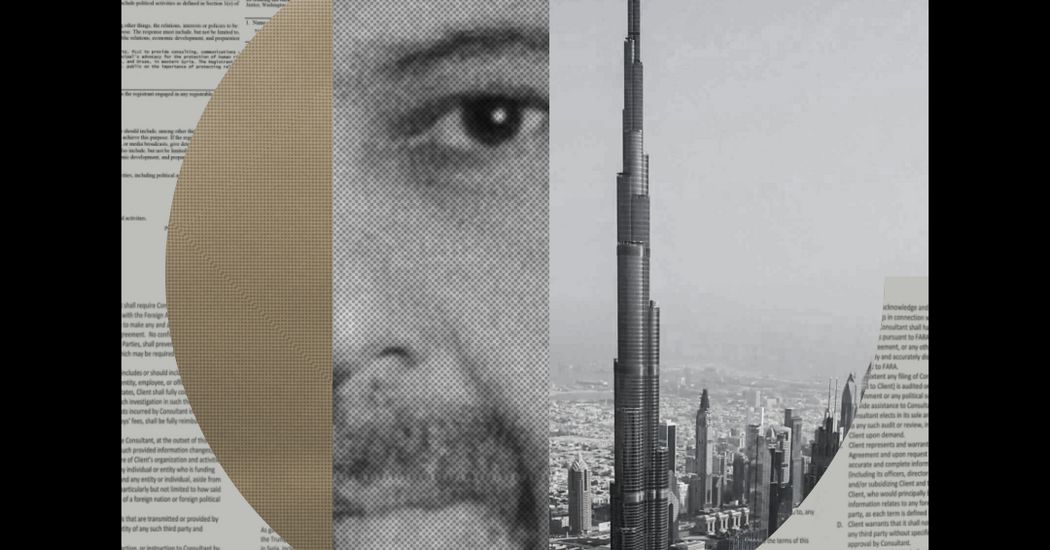
After the Regime of Assad Collapses, His Enforcers Live Large and Remain Under the Radar
The Four Seasons apartments in Moscow provide living rooms adorned with crystal chandeliers, stunning views of the Kremlin, and a concierge service prepared to arrange anything from Bolshoi Ballet performances to private jet charters. The residences, priced up to $13,000 per week, are marketed as “ideal for family reunions, cocktail gatherings, and corporate functions.” Or, in the case of some of the world’s most-wanted war criminals, a lavish start to their lives in exile. For years, President Bashar al-Assad and his associates orchestrated the torture and disappearance of countless individuals. With the aid of Russian air support, their relentless campaign lasted 13 years as they stifled a popular rebellion. However, in December 2024, a sudden rebel assault forced Mr. al-Assad and his closest allies to escape to Russia, where they reconvened at one of the city’s most upscale locations. Witnesses and acquaintances indicate that Russian authorities preferred to keep them consolidated for security monitoring. Maher al-Assad, 58, brother of Bashar and commander of Syria’s feared shock troops, the Fourth Armored Division, was seen by a former official in the hotel gym complaining about “the humiliation.” Over breakfast, others speculated about their futures, as recounted by three members of the regime’s entourage. A New York Times investigation has traced many prominent government and military figures connected to the most violent episodes of Syria’s recent past, including scientists involved in the chemical weapons program and intelligence chiefs charged with torture, revealing insights into their current lives and recent activities. The Times set out to discern the fates of 55 former regime leaders who vanished after Mr. al-Assad lost power, discovering that many are either thriving or staying hidden during their first year in exile, with nearly all evading justice. Extravagant birthday celebrations for the daughters of the Assad brothers have taken place at a villa in Moscow and aboard a yacht in Dubai, as reported by relatives, friends, and social media. According to two sources close to him, Ali Mamlouk, 79, the former top spymaster, resides in a Moscow apartment funded by Russia and prefers limited contact with visitors. Ghassan Bilal, 59, identified as a key player in the regime’s drug operation, is also in Moscow but maintains his family’s comfortable lifestyle abroad, from spots ranging from Spain to Dubai, as noted by three former officers. Others affiliated with Assad experienced a less favorable reception. They used bribes to board densely packed cargo planes to Moscow, only to be escorted into military housing. Jamil Hassan, 73, the air force intelligence chief accused of overseeing systematic torture and the execution of prisoners, was among those included, according to three individuals who claim to have interacted with him since then. A few scattered to places outside Russia, such as the United Arab Emirates and Lebanon, while others opted to stay in Syria, maintaining a low profile there. As this transpires, those affected by over fifty years of Assad family rule are left to question the whereabouts of individuals responsible for some of the worst atrocities in recent history — and whether they will ever be held accountable. The 55 individuals examined by The Times were powerful men with obscure public personas. They had ample time to master disguising their identities using aliases and bought passports. All are currently under international sanctions, and several face international arrest warrants. To gather additional information, we investigated abandoned regime properties, searched the open web, and consulted Syrian activists and lawyers seeking to track down their former oppressors. We engaged with international law enforcement and former regime associates. In certain instances, we confronted them directly. Our investigative efforts traced the locations of half of these 55 enforcers, with only one appearing to have been detained. Many have vanished or left scant evidence of their existence. Almost all who were interviewed requested anonymity, as they were part of confidential initiatives aimed at seeking justice or were fearful of retribution, either from former regime figures or from their victims. Lawyers and activists working diligently to locate perpetrators from the Assad era and hold them accountable cite a lack of political resolve as a significant hurdle. The new Syrian government is primarily focused on solidifying its grip on the country. Some foreign governments are said to be hesitant to extradite former allies or choose to leverage the fugitives as sources of intelligence. Shopping Sprees and Soviet Housing For segments of the regime elite, the initial months in Moscow resembled a form of vacation exile. Jamal Younes, 63, accused of instructing soldiers to fire on unarmed demonstrators, was spotted riding a scooter around Russia’s national stadium in an online video verified by acquaintances from his hometown. The prior defense minister, Ali Abbas, 64, and military chief of staff, Abdul Karim Ibrahim, 62, both facing allegations of torture and sexual violence during the Syrian uprising, were recognized by an old acquaintance as they explored Moscow’s modern, eight-story European Mall. Kifah Moulhem, 64, reportedly lives in a spacious villa in Moscow alongside his brother-in-law, Ghassan Ismail, 65, according to two contacts. Both former intelligence generals are said to have been implicated in the torture and detainment of protestors. Mr. Moulhem was one of the few officials The Times managed to contact for comments. He forwarded a lengthy denial of allegations related to crimes against humanity. He contended that any abuses by the Assad regime were insignificant when compared to the actions committed by Syria’s new leadership, who previously led an Al Qaeda offshoot before adopting a less extreme course. “This isn’t about hiding the crimes or violations of the former regime — mention these crimes truthfully and fairly — but do you truly believe that the former regime can be equated to Al Qaeda?” he wrote, asserting that documented instances of mass torture and executions at facilities like Sednaya were fabricated. When asked about his life in Russia, Mr. Moulhem summarized: “We live as ordinary citizens.” For individuals accustomed to a life of privilege and authority, the conditions of Russian exile do present some humbling realities. Officials who once silenced their adversaries with brutality are now themselves being muted. Russia enforced strict limitations on the use of social media and public communication, several ex-officials and their family members reported. Security measures significantly restrict the movements of many senior officials, they noted. The Russian authorities did not reply to inquiries regarding the Assad officials residing within the nation. An even more humbling reality confronted over 1,200 Syrian officers, who scrambled to board Ilyushin jets bound for Moscow from a military base on Syria’s coast, often offering bribes. Upon their arrival, those who spoke with them revealed that the officers applied for temporary asylum, often feeling that their situation in Russia was tenuous. These Syrian officers did not enjoy the luxury of the Four Seasons; they were placed in Soviet-era facilities with dormitory-style accommodations, having to share rooms with three to four others, according to four former officers. Complaints about Russian cuisine and strict meal schedules were common. While living collectively, they occasionally settled old grievances. In a widely reported incident at one such Moscow facility, some disgruntled officers physically assaulted and spat on Asef al-Deker, 60, a military police commander accused of overseeing prisoner torture — and by many of his own subordinates, extortion. This account, recounted by the four former officers, was likewise verified by an aide still communicating with Mr. al-Deker. Weeks into their exile, several of the officers noted they were presented with a choice: either relocate and live independently at their own expense or stay on state assistance while being redistributed across Russia. Those who opted for the latter reportedly found themselves as far away as Siberia. Many high-ranking commanders, fellow regime members affirm, secured accommodations of their own, often lavish. One exception was Aous Aslan, 67, an army major general suspected of facilitating mass killings and harsh crackdowns on civilians. A rare snapshot of Aous Aslan, the former commander of a notorious military brigade accused of attacking peaceful demonstrators. Credit…Muhsen AlMustafa He was initially dispatched to Kazan, located roughly 450 miles east of Moscow, as detailed by three associates and a fellow officer who shared that he claimed to lack savings. However, this humbling lifestyle prompted a swift transformation, they reported, and months later, Mr. Aslan was seen in a luxury apartment valued at millions in Moscow. “He tried to feign poverty,” one friend in Damascus joked. “But he couldn’t sustain the act. Now he’s living his best life.” Gulf State Spending Numerous insiders from the regime have stated that the United Arab Emirates is their favored refuge, owing to its common language, warm climate, and opulent lifestyle. Many senior Syrian officials had good relations with its autocratic leadership, which has been open to hosting some of them but with conditions attached. The Emirati government required fleeing Syrian leaders to sign agreements forbidding political statements and directed them to abstain from social media or drawing attention to their presence, according to two former Syrian officials who agreed to these terms. Emirati officials did not respond to questions regarding Assad officials residing there. Among those The Times tracked to the Emirates is Mohammad al-Rahmoun, 68, previously the interior minister and head of Air Force intelligence, accused of orchestrating mass detentions and extrajudicial executions. We spoke to three individuals who claimed to have met Mr. al-Rahmoun in the United Arab Emirates. Shortly following the regime’s collapse, social media accounts verified by The Times illustrated his daughter selling jewelry while his son launched a luxury vehicle repair business in Dubai. Several prominent businessmen managing the Assad family’s fortune live there without restrictions, patronizing upscale restaurants and cafes, according to reports from various Syrian businessmen and former officials. However, Emirati authorities have urged high-ranking government and military individuals to avoid extended stays, those same sources stated — even though these former officials could still invest in the country. An example is the ex-general Ghassan Bilal, per two of his fellow officers and a family acquaintance. U.S. and European sanctions accuse him of facilitating captagon trafficking, a highly addictive amphetamine believed to have generated over $5 billion for the regime. While in Damascus, The Times explored two expansive properties that neighbors claimed belonged to Mr. Bilal — one featuring swimming pools, a Turkish hamam, an outdoor theater, and photographs of family adorning the walls. A photograph of Ghassan Bilal displayed in one of his abandoned Damascus villas after the regime’s fall. Credit…Erika Solomon/The New York Times France issued an arrest warrant for Mr. Bilal in August, implicating him and six others in the targeting of civilians during the harsh siege of the central city of Homs in 2012. Investigators have also accused them of orchestrating a 2012 bombing that resulted in the deaths of French photographer Rémi Ochlik and American war correspondent Marie Colvin. Nonetheless, two associates reported that the former general has invested in real estate in the Emirates since the regime’s collapse, including properties in two villas on The Palm, a luxurious man-made archipelago brimming with hotels and residences. His wife and children divide their time between Spain, where the family possesses property, according to two fellow officers and two family friends, maintaining this arrangement for years. Mr. Bilal’s daughter is enrolled at a private university north of Madrid, according to family friends, appears to post on social media about her academic endeavors there, and was observed by a Times reporter during a campus visit. The Ministry of Foreign Affairs in Spain did not comment, stating it “cannot provide data on specific individuals.” Another general, Yassin Dahi, 64, is encountering health and financial challenges in Dubai, based on information from one of his daughters. Mr. Dahi, who retired before the regime’s downfall, previously led the Military Intelligence Directorate’s Branch 235 in Damascus — commonly referred to among Syrians as the dreaded “Palestine Branch,” infamous for systematic torture and enforced disappearances. Mr. Dahi awaited a Russian evacuation flight for two days but, plagued by a heart ailment and fearing for his safety, ultimately opted to join his family in Dubai on an expired tourist visa, as relayed by one of his daughters. Fearing deportation, he has been unable to seek medical assistance at hospitals and is “close to running out of funds,” she reported. Mr. Dahi is apprehensive about returning to Syria, she added, partly due to the assassination of a son-in-law, an engineer at the presidential palace, in an apparent act of vigilantism. Chasing Ghosts Another segment of former regime officials comprises those who remained behind. Some are concealed, at least one is under arrest, and others exist in plain sight. One general reported to currently be in Syria is Issam Hallaq. He supervised Syria’s air force from 2010 until October 2012, during which time the Assad regime began deploying airstrikes against its own populace to quell dissent. Following the regime’s collapse, Mr. Hallaq and a group of retired officers formed a veterans’ organization and explored collaboration with Syria’s new leadership. They offered technical expertise on issues like tank and aircraft maintenance to the emerging ministry of defense, as stated by three fellow officers. However, this partnership was short-lived. Months later, they were informed that the new government would only collaborate with — and provide pensions to — officers who had retired prior to the commencement of the uprising in 2011. The officers claimed that Mr. Hallaq is now impoverished and remains hidden in his apartment in Damascus, fearing arrest. He declined, through an intermediary, to participate in an interview. Among the 55 regime figures we scrutinized, we identified only one with indications of having been detained: Tahir Khalil, 70, who, as the former head of the artillery and missile directorate, oversaw chemical weapons and other assaults on civilian areas, according to the European Union. The Times obtained what appears to be the first known image of Tahir Khalil — previously absent from any public record — via a leaked government document. For years, he was virtually a ghost — his visage and biographical details largely unknown. However, we recovered his photo, date of birth, and hometown from governmental personnel files. This led us to his birthplace in Safita, situated around 90 miles northwest of Damascus. There, a local security official, who provided only his nom de guerre, indicated that Mr. Khalil had been arrested in February after attempting to stay under the radar by masquerading as a harmless retiree. The official shared an image of Mr. Khalil in custody and additional confirming details, stating he is being detained in Damascus. The Syrian government has not made Mr. Khalil’s detention public — perhaps reflecting its struggle to determine how to manage such cases. A Clear Conscience In a historic neighborhood of Damascus, adorned with flowering vines, lies an elegant stone structure familiar to numerous Syrians — a setting featured in a recent popular television drama. However, few are aware that it also serves as the residence of Amr al-Armanazi, 81, the former head of the research facility behind Syria’s chemical weapons program. He retired in 2021, appearing to live comfortably. Answering the door in his bathrobe, he welcomed a Times journalist into his marble-floored apartment filled with oriental rugs, ready to share his life story and thoughts on Syrian history — except for the work that led 33 countries to impose entry bans on him. Sanctions from the U.S., Europe, and the U.K. identify Mr. al-Armanazi as a key figure in the production of chemical weapons used against Syrian civilians. According to two U.N. investigators informed of the session, Mr. al-Armanazi has cooperated with questioning from the U.N. body responsible for upholding the international chemical weapons ban, yet he has not been interrogated concerning potential war crimes. It remains uncertain if Syrian authorities have ever queried Mr. al-Armanazi, who recently joined a Syrian university’s board of trustees, according to a post on the institution’s Facebook page. He exemplifies a number of senior Assad-era officials believed to be residing freely in Syria, without any official clarity regarding their exoneration status or potential agreements made for leniency. The Syrian information ministry asserted that the government has not provided immunity to regime members. It did not respond to various inquiries regarding the status of prominent regime figures or any investigations into their alleged crimes. Two Syrian officials, who requested anonymity as they lack authorization to speak on behalf of the government, stated the priority is to prosecute those who ordered or committed attacks, not the scientists who supported these efforts. “Mr. al-Armanazi was far more than just a bureaucrat,” asserted Nidal Shikhani, director of the Chemical Violations Documentation Center of Syria and Same Justice, which investigates human rights violations. He stated that Mr. al-Armanazi served as the “chief architect — of both its scientific aims and its most nefarious legacies.” During two visits to his residence, the 81-year-old repeatedly declined to discuss his past. Nonetheless, he emphasized a point echoed by nearly every former regime official contacted by The Times. His conscience, he asserted, was clear. Additional reporting by José Antonio Bautista García and Devon Lum. Muhsen AlMustafa contributed research. Aaron Byrd provided motion graphics production.
Published: 2025-12-24 17:49:00
source: www.nytimes.com