

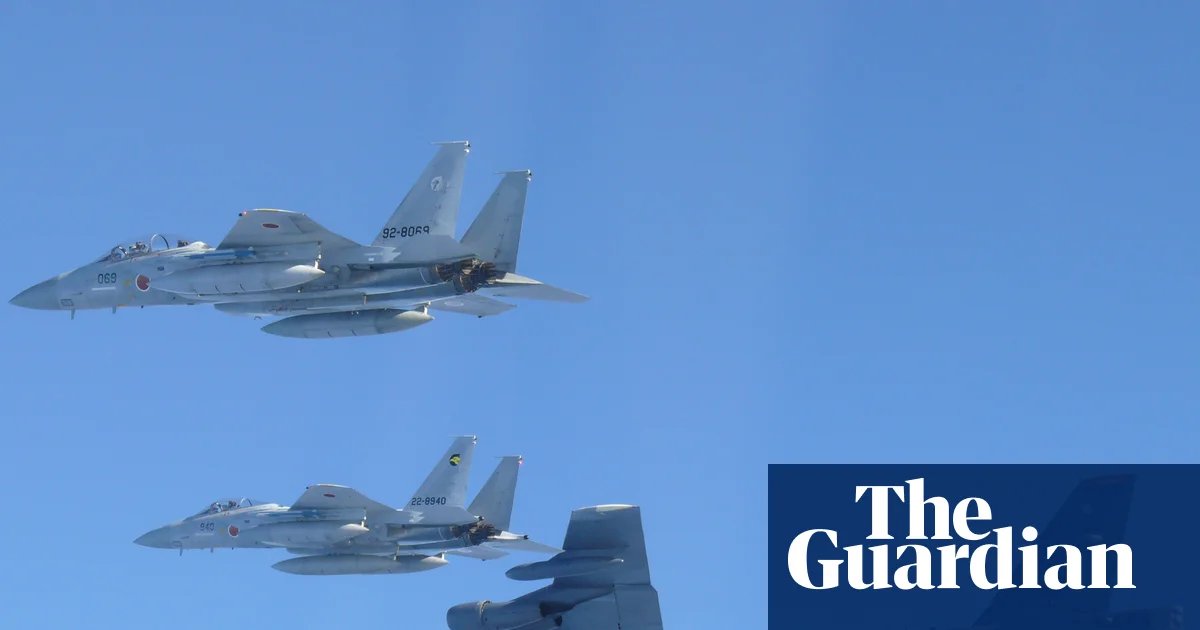
Japan’s cabinet approves record defence budget amid escalating China tensions
Japan’s cabinet has sanctioned a historic defence budget as tensions with China intensify, with Beijing recently accusing Tokyo of “fueling a space arms race.” The proposed defence budget for the forthcoming fiscal year – which gained approval on Friday – exceeds ¥9tn ($58bn) and represents a 9.4% increase compared to the previous budget, set to conclude in April. This rise occurs during the fourth year of Japan’s five-year initiative aimed at doubling its defense expenditure to 2% of GDP. The budget emphasizes enhancing strike-back capabilities and coastal protection through surface-to-ship missiles and unmanned weaponry. To safeguard coastal areas, Japan plans to allocate ¥100bn to introduce “massive” unmanned air, sea-surface, and underwater drones for surveillance and defense under a program named “Shield,” targeting deployment by March 2028, according to defense ministry officials. The budget increase coincides with escalating hostilities between the Japanese and Chinese governments. Beijing has persistently opposed Japan’s strengthening defenses, but relations deteriorated sharply last month when Japan’s prime minister, Sanae Takaichi, remarked that Japan would likely engage militarily if China were to assault Taiwan as part of its intentions to annex the territory. Takaichi’s comments prompted an angry response from Beijing, which initiated a series of diplomatic and economic countermeasures. Takaichi has remained steadfast in her remarks, and the government asserts they do not indicate any shift in Japan’s defense policies. Chinese officials have openly criticized Tokyo, seizing on every military-related development. On Thursday, China’s defense ministry stated at a routine press briefing that Japan’s advancements in space technology – some developed in conjunction with the US – were “accelerating the weaponization and militarization of space, and fueling a space arms race.” According to Japanese media, Tokyo has been launching multiple rockets since March 2023, carrying cargo spacecraft and satellites designed for GPS and intelligence-gathering purposes. “Given that Japan’s militaristic past included surprise attacks, and the country is now adopting an aggressive space policy, it is understandable that concerns are mounting about a potential Pearl Harbor repeat,” stated defense ministry spokesperson Zhang Xiaogang on Sunday. Japan’s post-World War II constitution prevents it from resorting to force in international disputes, but a 2015 amendment – enacted during the tenure of Takaichi’s mentor, Shinzo Abe – allows for collective self-defense in specific circumstances, even if Japan is not under direct attack. Japan’s present security strategy identifies China as its foremost strategic challenge and advocates for a more proactive role in security partnerships with the US. On the same Thursday, China’s defense ministry criticized the US for its ongoing support for Taiwan, just a week following the approval of a significant US arms sale to Taipei exceeding $10bn. Although the US does not officially recognize Taiwan diplomatically, it is the island’s primary ally in its efforts to counter Chinese annexation threats and is mandated by US law to supply it with the means to defend itself. Last week, the US Senate also passed the National Defense Authorization Act, which includes provisions to allocate up to $1bn in 2026 for Taiwan-related security initiatives. Zhang accused the US of “emboldening Taiwan independence” efforts and jeopardizing peace and stability. China is undergoing a protracted transformation and modernization of its military, primarily aimed at enabling a forceful takeover of Taiwan. Beijing asserts that Taiwan is a province that must be “reunified” with the mainland; however, a significant majority of Taiwan’s populace opposes this notion. Its rapidly expanding navy and air force are increasingly operating beyond their borders, leading to multiple encounters with other military forces. Earlier this month, Chinese aircraft locked their radar onto Japanese planes during exercises near southwestern Japan, prompting a protest from Tokyo. Locking radar is recognized as one of the most aggressive maneuvers a military aircraft can execute as it suggests a potential assault, compelling the targeted aircraft to take evasive measures. Zhang stated that China’s defense spending is reasonable and moderate, and its operations are “fully in compliance with international law.” Additional research by Jason Tzu Kuan Lu
Published: 2025-12-26 06:16:00
source: www.theguardian.com