

Thailand and Cambodia Establish Cease-Fire in Intense Border Conflict
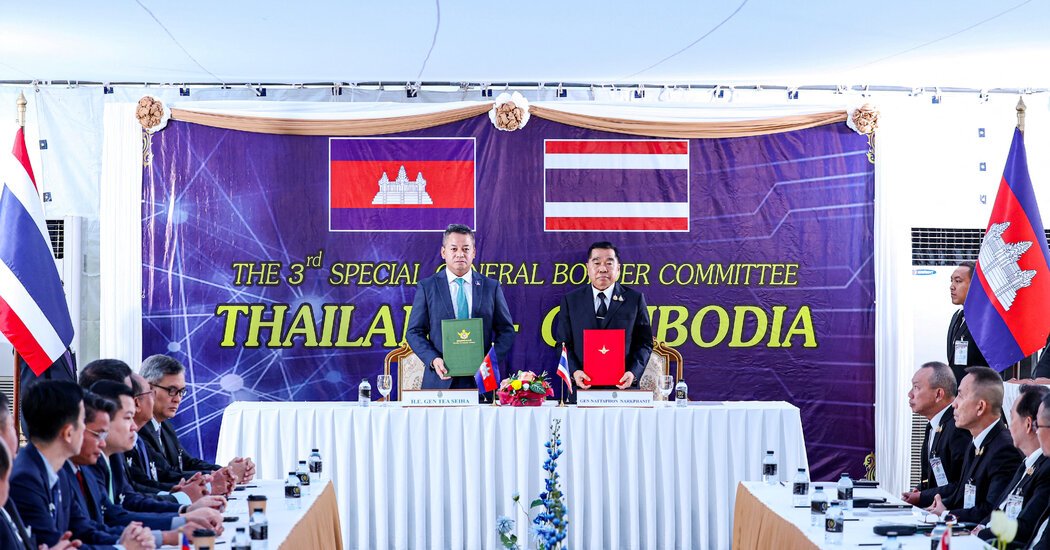
On Saturday, the defense ministers of Thailand and Cambodia announced that they had reached an agreement for a 72-hour cease-fire, potentially signaling an end to a harsh 20-day border conflict that has resulted in numerous fatalities and displaced hundreds of thousands. This unexpected declaration came after two days of intense discussions between the militaries of both nations and was made amid increasing calls for an end to hostilities from the United States and China. The cease-fire is set to commence at 12 p.m. on Saturday, as reported by Cambodian state television. Essentially, this cease-fire reestablishes the terms of a previous accord that President Trump facilitated in October. However, the stability of this agreement remains uncertain, primarily due to the fact that it does not address the fundamental issue plaguing Thailand and Cambodia: significant segments of their nearly 500-mile frontier are still ambiguous. The animosity between both parties has deepened this year. Hostilities carried on right up until the agreement was made. Cambodia’s Defense Ministry reported that Thailand had deployed F-16 fighter jets to drop four bombs in the Kompong Svay District within Cambodia’s Banteay Meanchey Province. Thailand’s air force did not provide immediate comments concerning the situation, but several Thai news organizations indicated that airstrikes were directed at arms storage facilities. In recent days, both the United States and China have simultaneously initiated diplomatic measures to resolve the crisis. Mr. Trump, positioning himself as a global mediator, has included the conflict between Thailand and Cambodia as one of eight disputes that he claims to have resolved globally. On December 12, he had prematurely announced that a cease-fire had been agreed upon by Thailand and Cambodia, a claim that Thailand contested, resulting in continued fighting for weeks after. Just last week, Secretary of State Marco Rubio and Chinese Foreign Minister Wang Yi engaged with their counterparts in Thailand and Cambodia, urging them to lower tensions. Until Friday, it was uncertain whether Thailand and Cambodia had made headway towards a cease-fire. The initial discussion lasted only 30 minutes before Cambodian officials left the room. On the following day of negotiations, Cambodia dismissed Thailand’s conditions for a cease-fire, which included a request for Cambodia to announce a unilateral cease-fire first and to commit to the removal of land mines along the border. Thailand has accused Cambodia of deploying new land mines that, according to them, have resulted in injuries and fatalities among Thai soldiers, citing the frequency of such explosions as indicative of Cambodia’s insincerity in previous negotiations. The latest cycle of conflict began in early December following a brief clash between Thai and Cambodian troops that left two Thai soldiers injured. Thailand, possessing a more advanced military, reacted with extensive airstrikes. Cambodia retaliated with rocket fire, igniting Thai residences. In the preceding weeks, the Thai military has intensified its air campaign, targeting scam compounds and bridges that they claim threaten Thailand’s sovereignty.
Published: 2025-12-27 05:46:00
source: www.nytimes.com